Starling
Where does a woman find freedom in a city life bounded by motherhood, car horns, glaring street lights, and the silent expectation that we succumb to flying in formation?
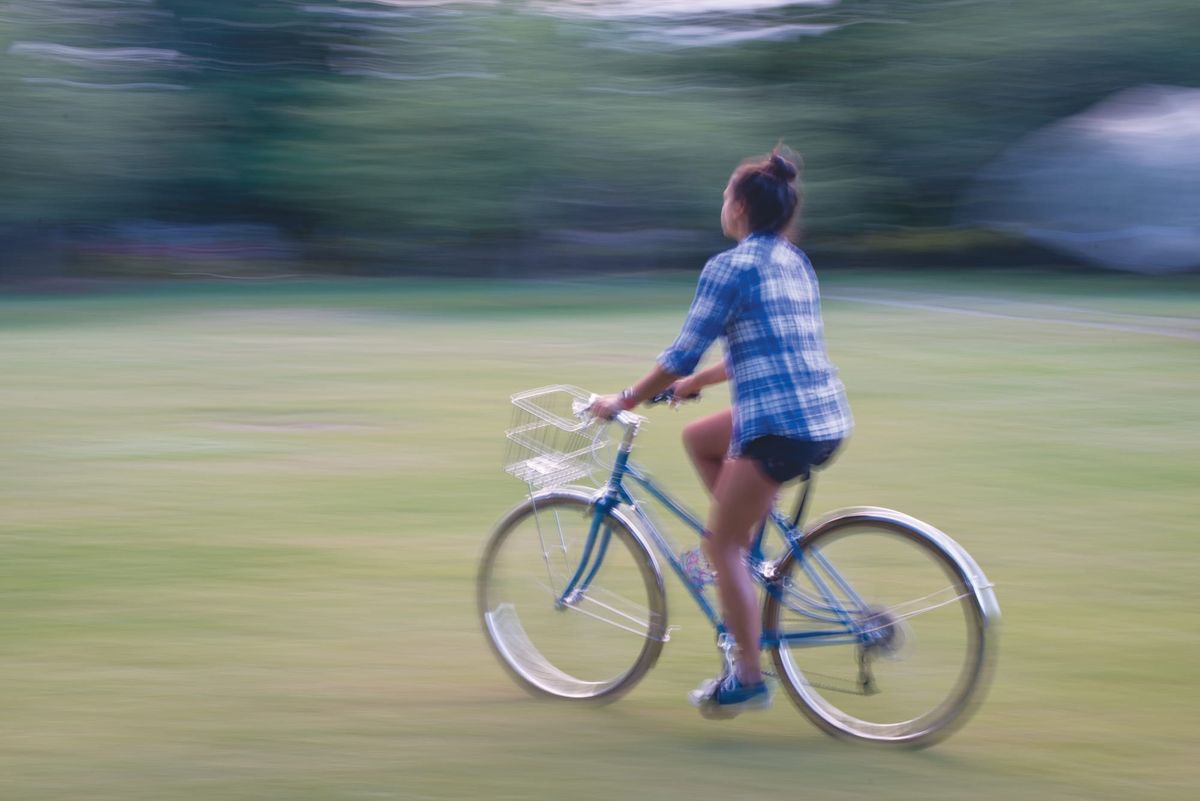
I have never been in a murmuration. I think I would like it among the flock. It is dusk in a field somewhere when we rise into the sky and coalesce. We dart and wheel on short sharp triangle wings. A threat compels us. This display of aerial prowess is an elaborate escape maneuver. The mechanisms of our seamless coordination baffle. Our path is unpredictable, even to us, the murmur. We commit to a course moment by moment. Teetering on the precipice of change, we make no plan but notice the slightest shift in the wing most immediate to ours and follow suit. Together we look like stringed instruments sound. We are called a shape-shifting cloud. We are called astonishing.
The starling in flight on my bicycle’s frame is a golden silhouette. Her short sharp triangle wings give her away. Other blackbirds swoop, rising and falling, but a lone starling’s flight is direct and swift. Starlings have iridescent flecks of purple and green in their feathers, like crows glammed up. “Pretty bicycle,” I hear often from other riders.
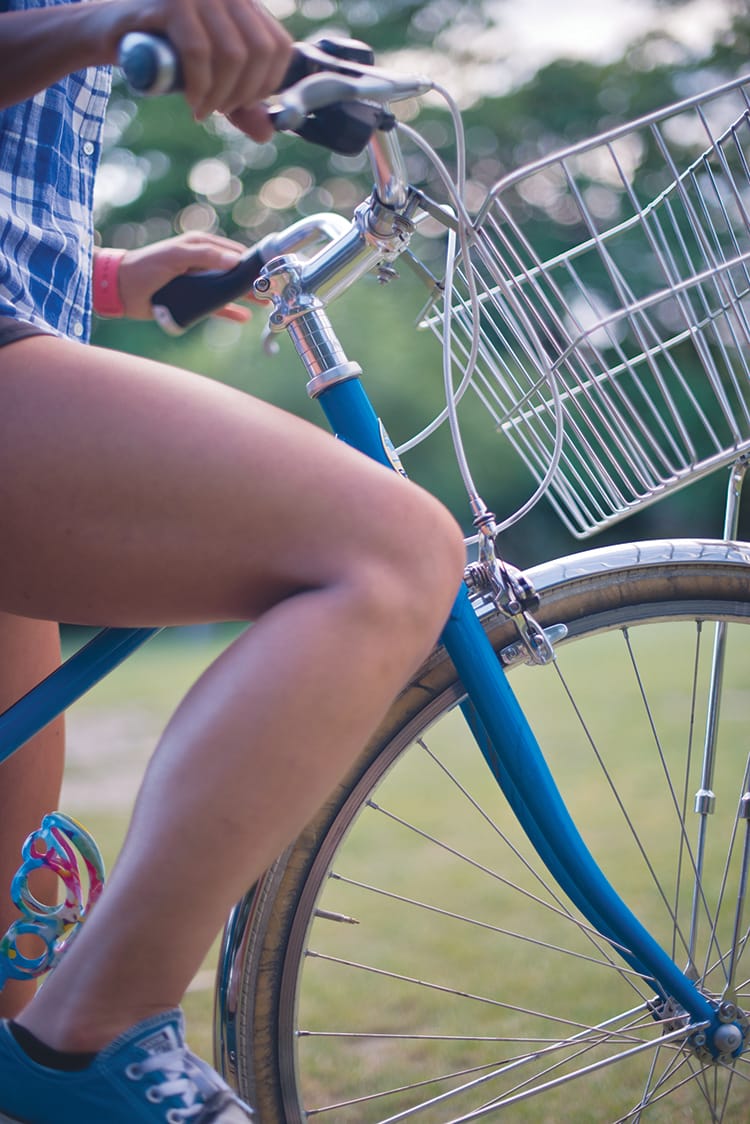
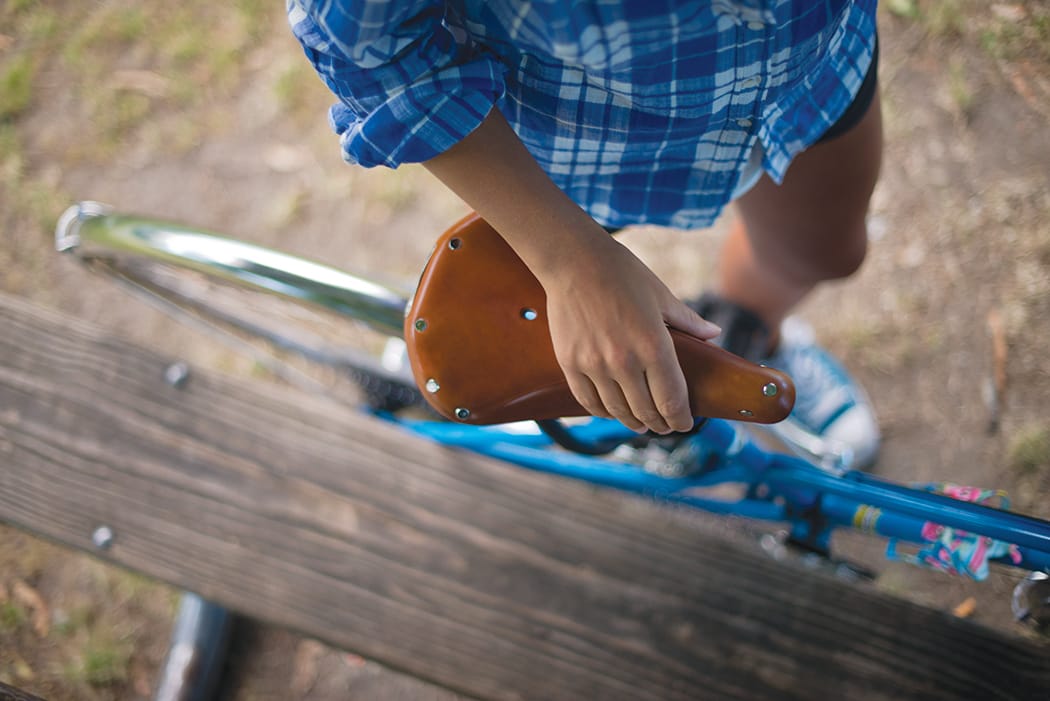
The Starling is pretty, down to the delicate silver wire that I wove through the brake tubes I affixed to the frame. I built this bicycle piece by piece. The second time I touched each component it was the end of winter. The Starling was filthy. Warm sudsy water in a bucket quickly turned black, sediment sinking to the bottom. I soaked the chain and poked out clogs of grime from between its teeth. I wiped down metal until it gleamed, noticed the divots in the frame where I’d splayed the Starling out gracelessly on the road, and scratches made by the attachment for the half-bicycle that I towed for my daughter, my fledgling. I oiled brown leather and pumped more air into white wall tires. I adore you, I thought, and immediately I was embarrassed. The Starling is a bicycle, a mere thing. But like some things is it is more. Preening, I wash winter from my set of steel wings.
Some of us (my mother, my daughter) need to be in water. Others crave the forest floor or to be surrounded by the music they make themselves. I need to be on a bicycle. I suss this out now as an adult with the benefit of historical analysis. As a child I just knew—this, I love this. I learned to ride a bicycle on one from the neighbors’ rusted ragtag fleet. I was four years old. With my little brother napping at home and my mother occupied, I wandered across the road and through a field to the neighbors’ house where the oldest girl and boy were riding bicycles in the yard of hardpan grass and dirt. “Do you want to play with us?” the oldest girl, twice my age, demanded. She wheeled over a bicycle much too big and held it while I climbed on. She gave me a shove. The bicycle’s size forced a choice between sitting on the seat and pedaling. I never sat but stood on the pedals, pumping to keep up. To stop I slammed back on the pedals to brake and then, as the bicycle lost its balancing momentum, I leapt off, skittering away as it crashed down. I fell often. My mother washing me in the bathtub at night was aghast at the state of my little body covered in bruises and scrapes. But with a bicycle to ride and a flock to ride in if I pleased, I cared nothing of abrasions, nothing for the gravel in my palms and knees that my father plucked with tweezers from my puckered water-softened skin.
The Starling is heavy framed. Unpacked from its shipping box and clamped bare to the work stand in the bicycle shop’s back room, we appreciated that the frame’s blue is brighter, prettier than in the catalogue. I arranged the components on the floor beneath the frame, and then over the course of two days, I unwrapped, augmented and put each one in its place.
The Starling is a different breed entirely from the road racing bicycle I commanded in my twenties. The pack I rode in then was the cavalry. Backs bent, necks jacked, and dressed in kits covered in the logos of sponsors, we galloped ahead as fast as we could. My road bicycle was stolen. It was the most expensive thing I owned, and I couldn’t afford to replace it. Once I could, a decade later, I had a little girl and a body that would not contort to road racing form.
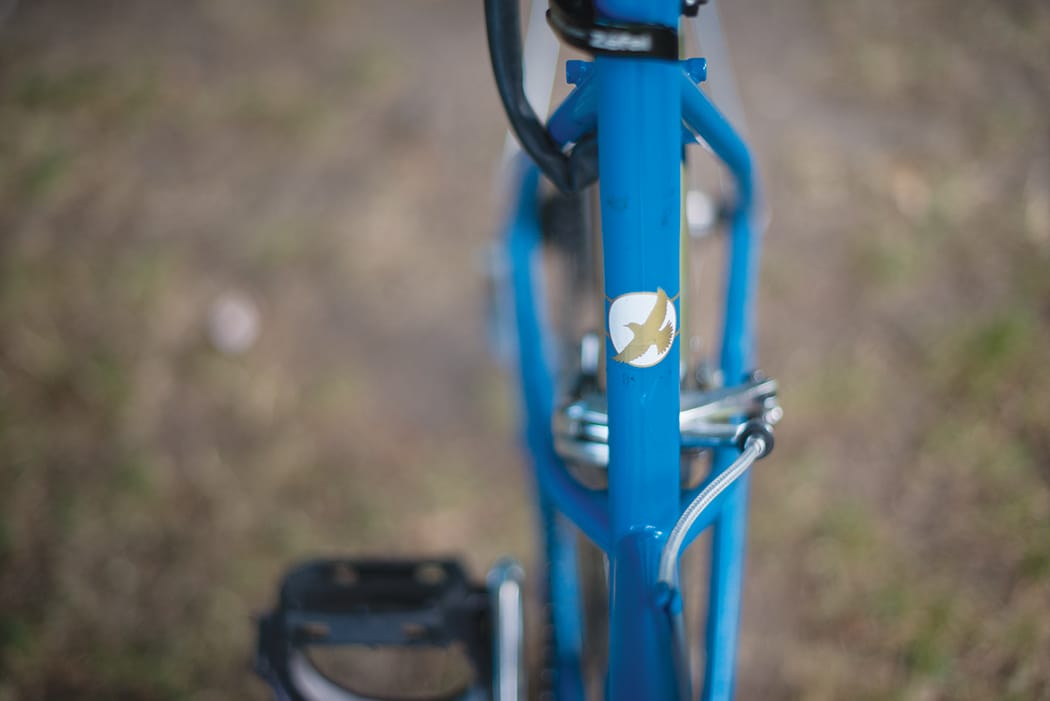
The new bicycle shop in my neighborhood was a one-man operation. Cory came from Milwaukee where he was a social worker turned bicycle mechanic. In too many words, I described to Cory the bicycle I imagined, not knowing it already had a name: Cruiser. On my cruiser named Starling I sit upright with only the lightest touch on handlebar grips positioned perfectly to support my wrists and elbows, shoulders and spine. It is an adult bicycle—sturdy, sensible shoes, but actually beautiful preened short sharp powerful wings.
Riding the Starling during daylight hours attending to business, I am direct and swift. Pedaling with my little girl I am also at constant attention, buffering her in traffic and chirping directions. For two years I pulled her behind me. We chatted. She sang. We raced pre-teen boys on BMX bikes, and she honked her horn loudly as we passed. At stoplights she ate candy she had stashed in her dress pockets. Then she was too big to be pulled. I found a grassy hill and sent her down it on her own bicycle with white wall tires. She dismounts like a rodeo star. Swinging her legs to one side still at near full speed, she slips off her bicycle and still holding the handlebars, runs alongside. In the daytime we ride together, but when the sky darkens, I am blessedly on my own.
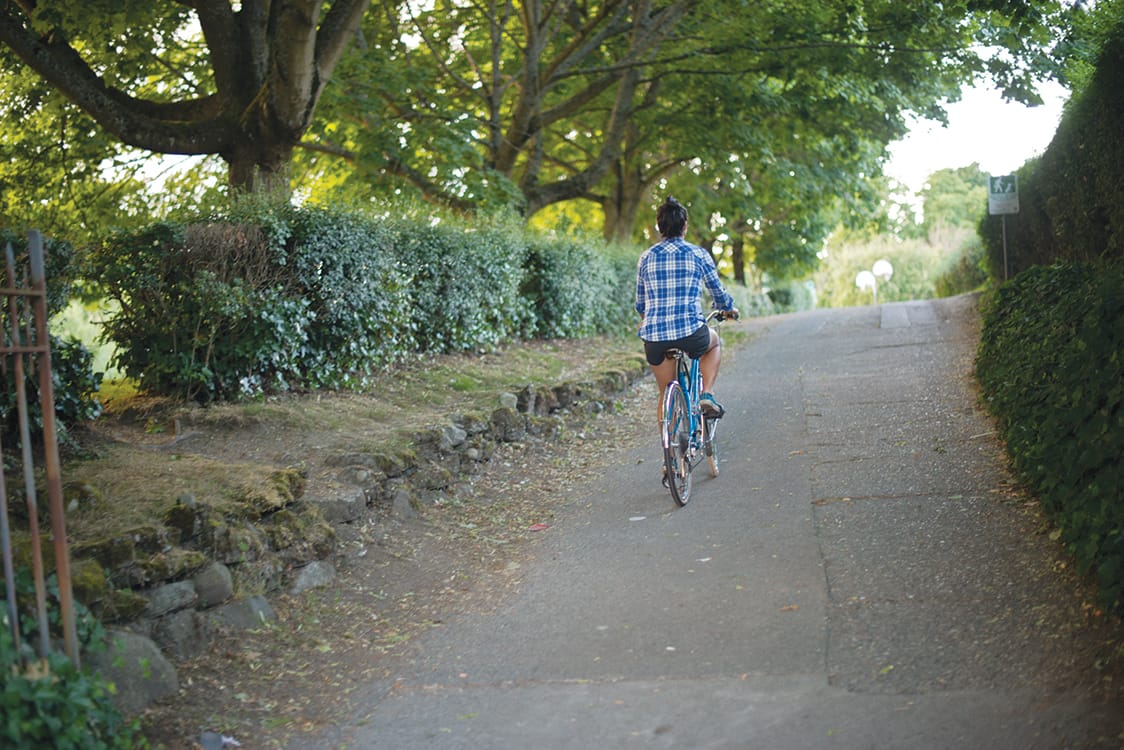
Riding a bicycle at dusk is freedom in an anchored life. In moonlight and streetlight, bicycle light and shadow, my known world transforms, as do I. Destination succumbs to journey. I ride where and how I please, as I did when I was a child on gravel roads and through fields. The others nested safe and dozing, I am alone—the iconoclast starling flying like another sort of blackbird, rising and falling.