Labyrinth Keeping
“As women, we are the caretakers,” Colleen Yerge reminds me. “I think recent political events have brought out the inner wild within all of us women. You know that mama bear feeling?
Perhaps there is no one who can tell us precisely what to do when it comes time to be the keeper of a piece of land. We can read books, take classes, observe grandmothers and gardeners, but when our turn comes, we must trust our instincts and dirty our hands. It may be the only way to truly learn how to care for what is wild, and in doing so, how to care for ourselves.
“As women, we are the caretakers,” Colleen Yerge reminds me. “I think recent political events have brought out the inner wild within all of us women. You know that mama bear feeling? I’m not a mother but I see how my sisters are with their children, how they go into a place of protective instinct. That’s how I feel right now about the earth. All of our mama bears are coming out. I’m witnessing it within myself, and it’s ferocious.”
Colleen is the keeper of the labyrinth at Lands End in San Francisco. I met her under dreamlike circumstances in Tulum during the summer solstice of 2011. The world, for those who use words like “consciousness,” was preparing for a cosmic shift. Shamans, visionaries, and intuitives described 2012 as a turning point, the start of a new awakening for humanity. It was the last year on the largest circle of an ancient Mayan calendar, and so Tulum seemed like a good place for a soul adventure.
Colleen stood with me in a circle of indigenous Mayans who had gathered at a several-thousand-year-old temple crumbling in the jungle. They were there to celebrate and chant blessings of gratitude to the cardinal directions, the four elements, and the sun. Invited, we listened in awe, hugged, laughed, even cried. In a way, we came of age. We also became friends.
“This land has a beautiful little labyrinth,” Colleen murmured the following morning over breakfast back at the retreat center next to Mexico’s Caribbean Sea. Her aqua-colored eyes were sparkling. “It’s made of seashells and coral. I walked it this morning at sunrise.”
I did not know what a labyrinth was then. She told me in her gentle way that a labyrinth is similar to a maze but for meditation—a singular walking path that weaves through a circle with only one way in and one way out. In between, the experience is your own. “It’s a lot like life,” she supposed.
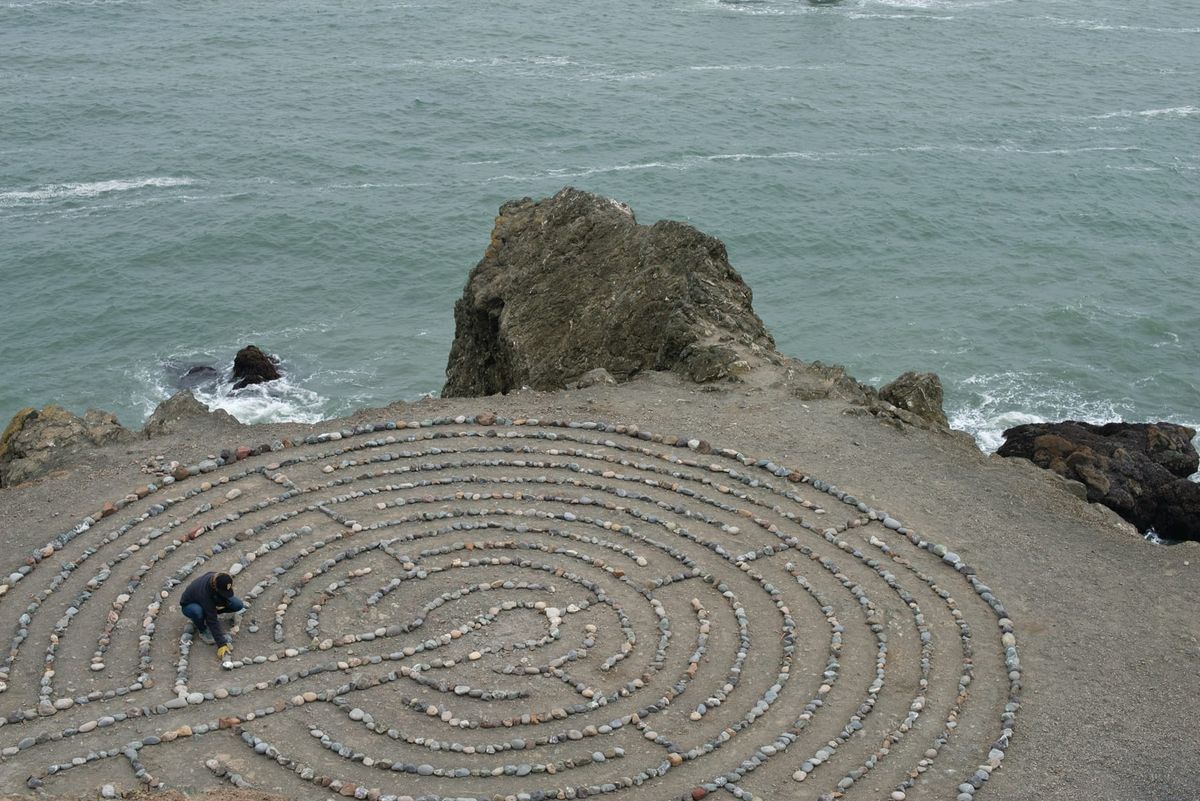
In time, I learned about another labyrinth, one in San Francisco that Colleen cares for. Perched high on a flat ledge above the Pacific, it is not her creation but it is her charge.
She first stumbled upon the symbolic artwork fashioned out of loose stones during an early morning run through nearby coastal trails with her brother.
“Something, I don’t know what it was, just kept on bringing me back here. You know when you follow an intuition rather than think about it? It was a feeling. I listened to it, and week after week I came back.”
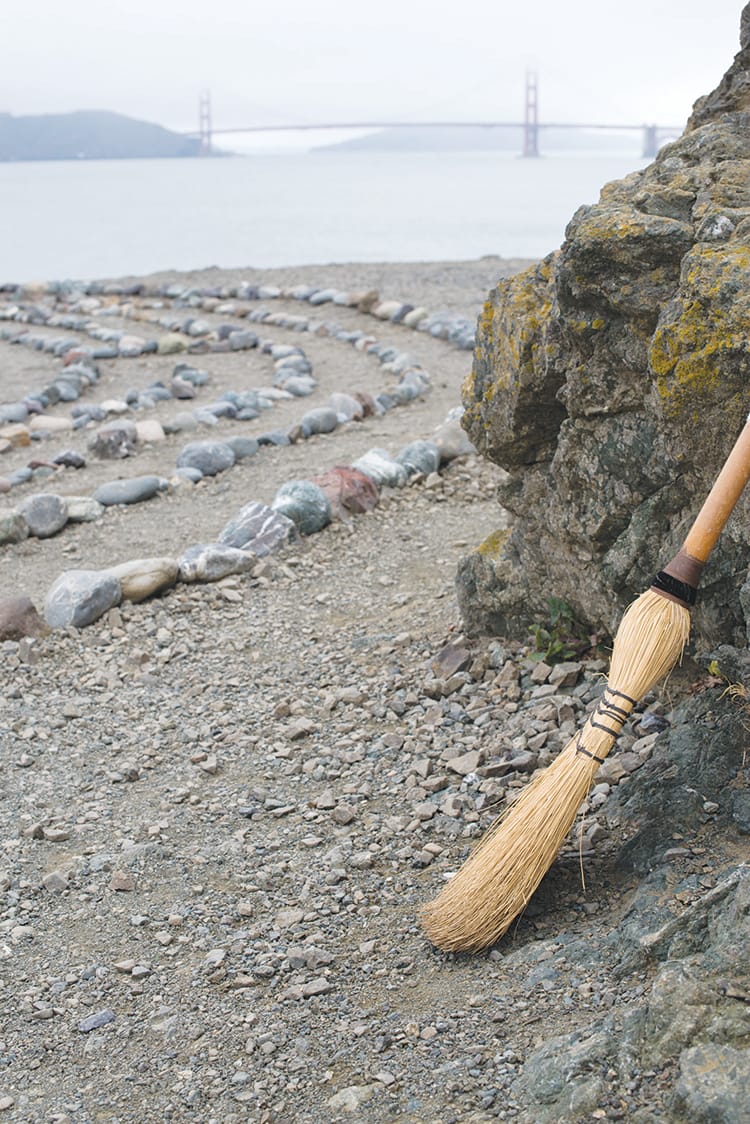
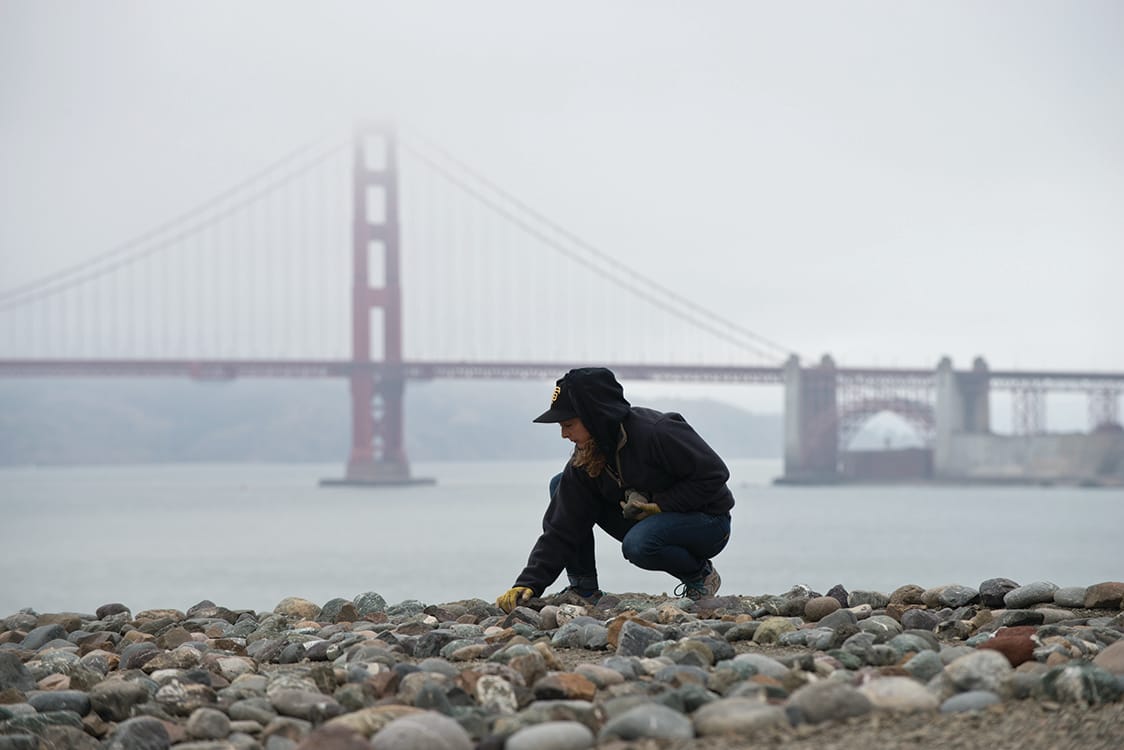
After awhile, she noticed it deteriorating. She bought a broom and started sweeping during her visits, guiding each stone back to its place, keeping the path visible and clear.
A decade has gone by and still Colleen cares for the labyrinth. I have visited a few times over the expanse of seasons, bearing witness to the lessons it has wrought and how artfully she weaves each one into her life.
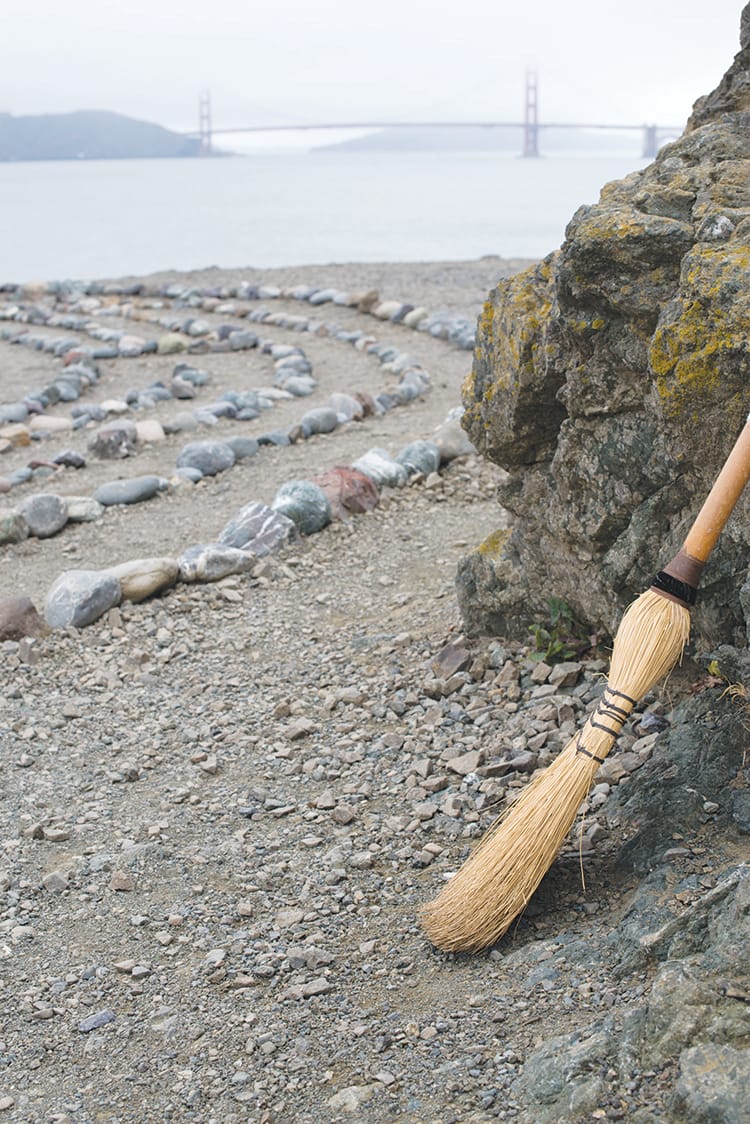
“In the beginning, I would walk in with a question and by the time I was walking out the answer would come,” she remembers. “Then I stopped walking it as much, and now I mostly maintain it. I spend so many hours here. It clears my mind. I arrive with several conversations going on in my head, but as soon as I start working it gets quiet.
“I had no idea what was going to happen when I started putting my hands on the earth. Something transfers over. It’s hard to explain but it brings me joy.”
For one thing, she says the labyrinth is a constant reminder to let go of attachments.
“It’s interesting that we are in this time now where if we ask someone how they are doing, they say ‘busy.’ We used to say ‘I’m good.’ Well, I am busy but I don’t function well when I’m busy. I don’t find as much joy when I’m going, going, going,” she admits.
Colleen makes her living in a myriad of ways and to describe herself as busy is perhaps an understatement. She is a nanny for a lively family. She is the founder of Mama’s Cookies; each week she bakes dozens of nourishing, all-natural cookies that support lactation. She is a gardener for hire and cares for most of the plants on Water Street, the verdant hidden alley in North Beach where she lives. She is a birth doula. She coaches couples who are considering parenthood. She cares for wild mothers of all kinds.
“This morning when I arrived at the labyrinth I was so wound up and the voice that came was saying ‘LET GO! LET GO!’ That’s all I kept hearing,” she laughs.
Since Colleen began keeping the labyrinth, it has been severely damaged numerous times. Once it was completely destroyed. She arrived that day to find nearly every stone gone, tossed over the edge of the cliff into the ocean. All that remained was a jarring and strange letter J formed by the handful of rocks that remained. At first she felt devastated.
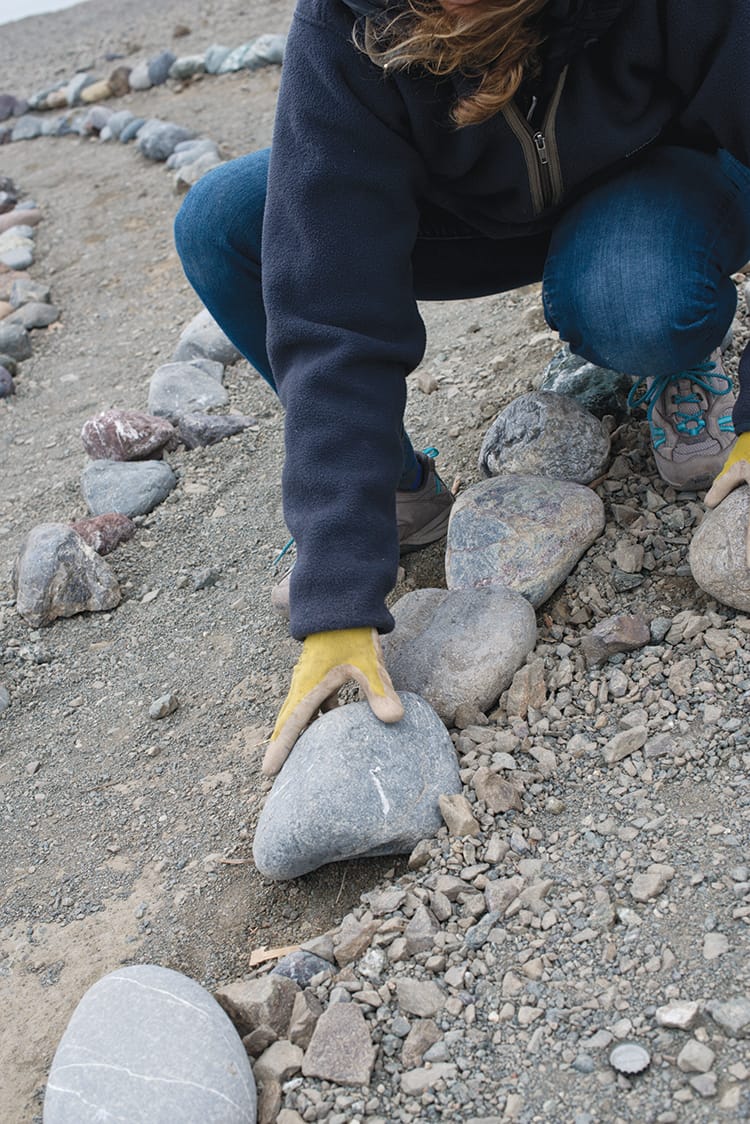
In time, a community came together and 250 people showed up one day to help her carry the heavy stones up from the shore and rebuild the labyrinth. The event made the local news and was written up in the San Francisco Chronicle.
Soon after the rebuild, on her way to sweep the labyrinth one early morning, a man wearing a hooded coat and two others she describes as feeling like his accomplices crossed her path.
If I had to meet face to face with darkness, Colleen is a woman I would want by my side. Steady in a crisis and calm in a storm, she always seems to know exactly what to do. Maybe this comes from caring for women as they give birth. Wherever it originates is a small matter compared to what it is: courage.
“It was the look in his eyes,” she remembers when I ask how she knew it had been him. “He smirked and said, ‘So. You rebuilt it again.’ I felt a shiver down my bones, I knew it was this guy. I also felt really solid. I didn’t feel intimidated. I was looking into this man’s eyes and it was so clear—he is not happy.”
She credits her brother for reminding her that every time the labyrinth is damaged or destroyed, it brings more people together. The community appears and grows.
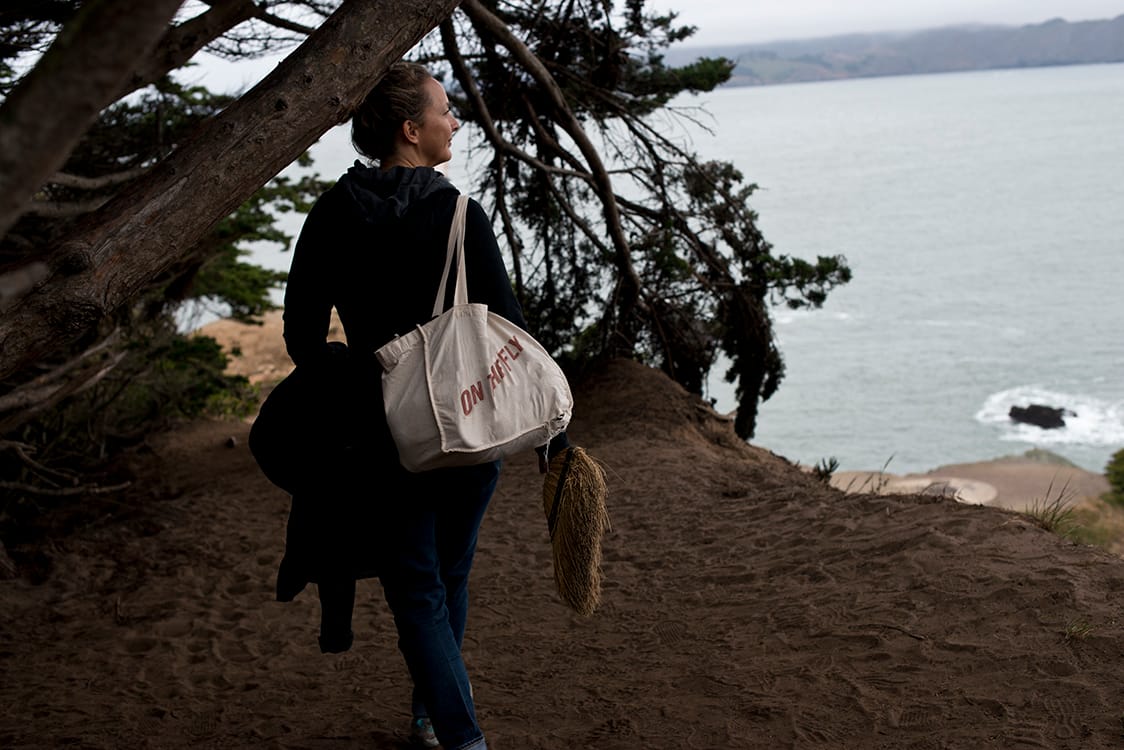
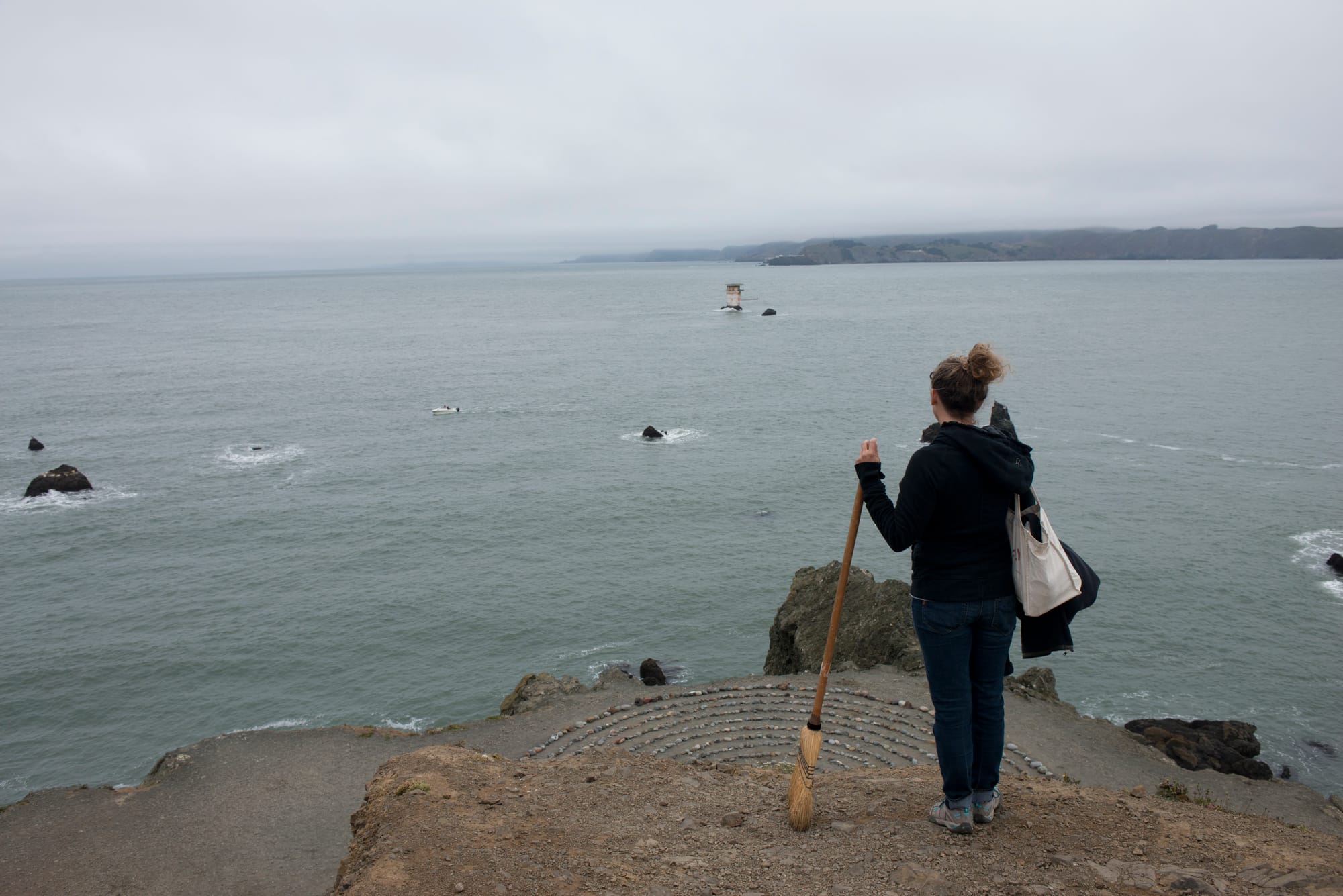
“It’s a beautiful thing,” she says. “This has never been my labyrinth. It’s something I tend to, but it’s everybody’s labyrinth because so many people love it. So even if there is one person who is going to destroy it, there are so many more who want it here that it will always be here.”
Colleen is quietly matter-of-fact in her final analysis. “Love always conquers,” she offers. “Don’t you agree? Love always conquers destruction in the end.”